Web App
K-Merch Inventory Management
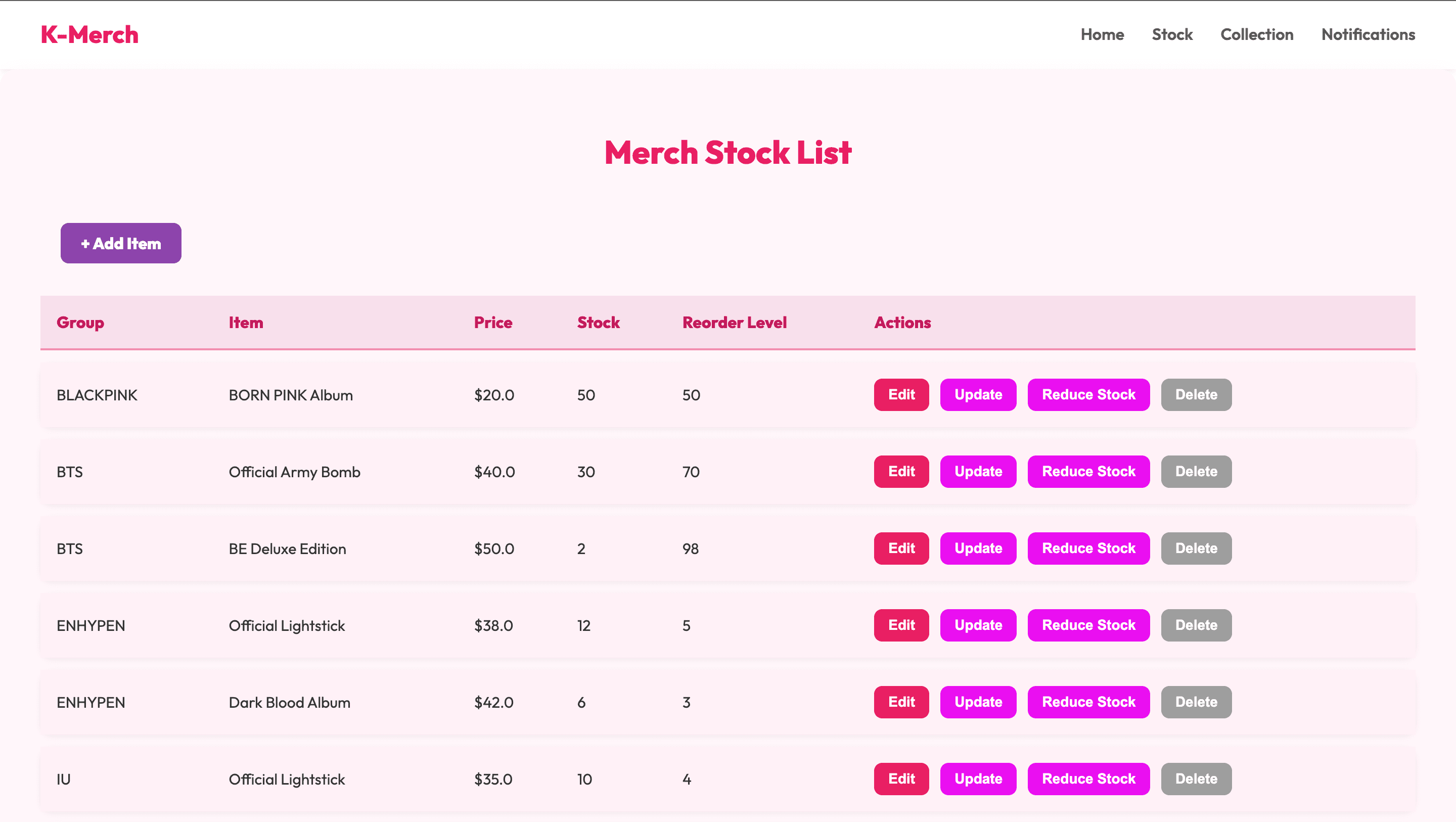
A web-based inventory management system for organizing K-Pop merchandise, tracking stock levels, and displaying low-stock notifications.
Overview
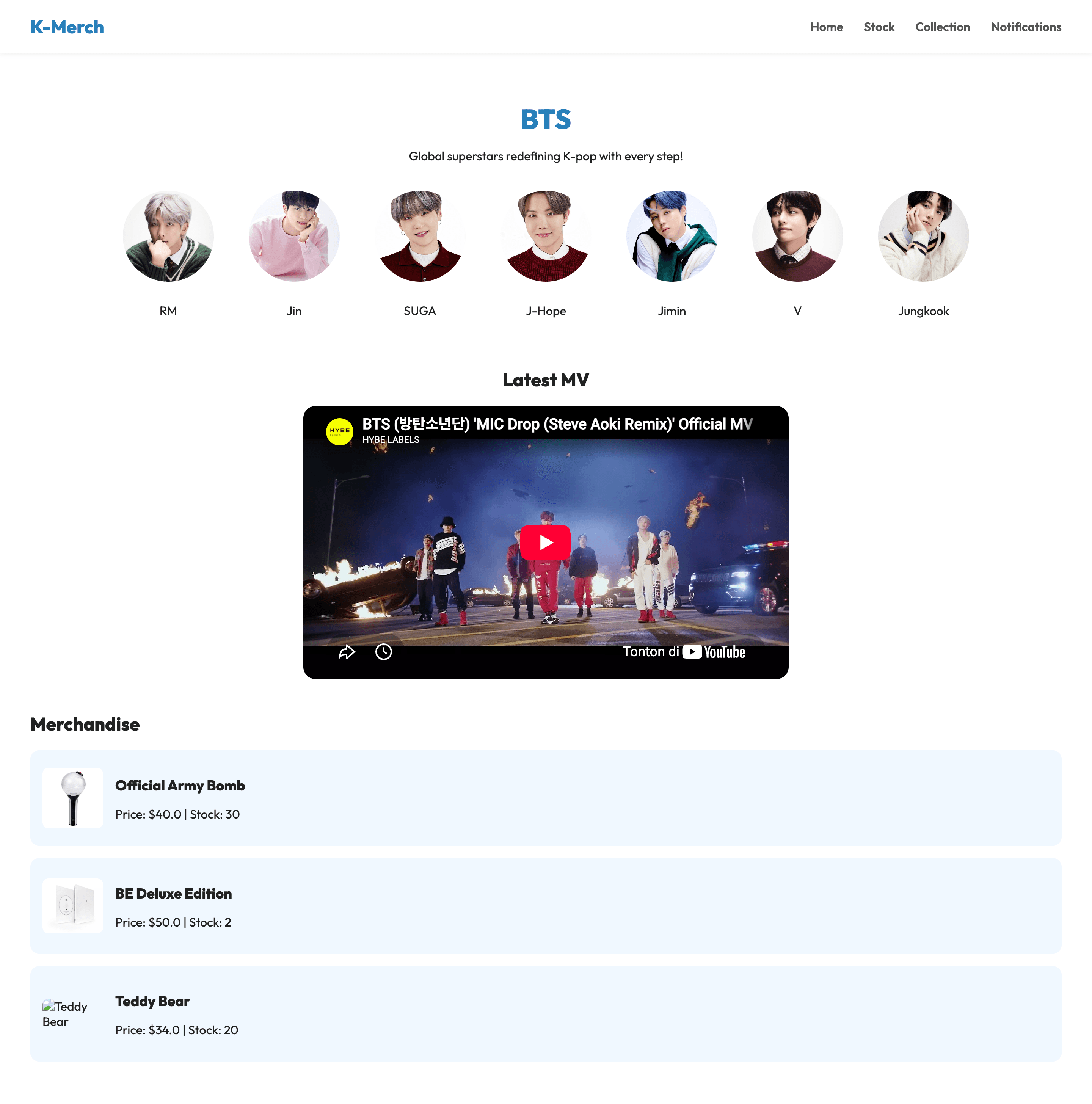
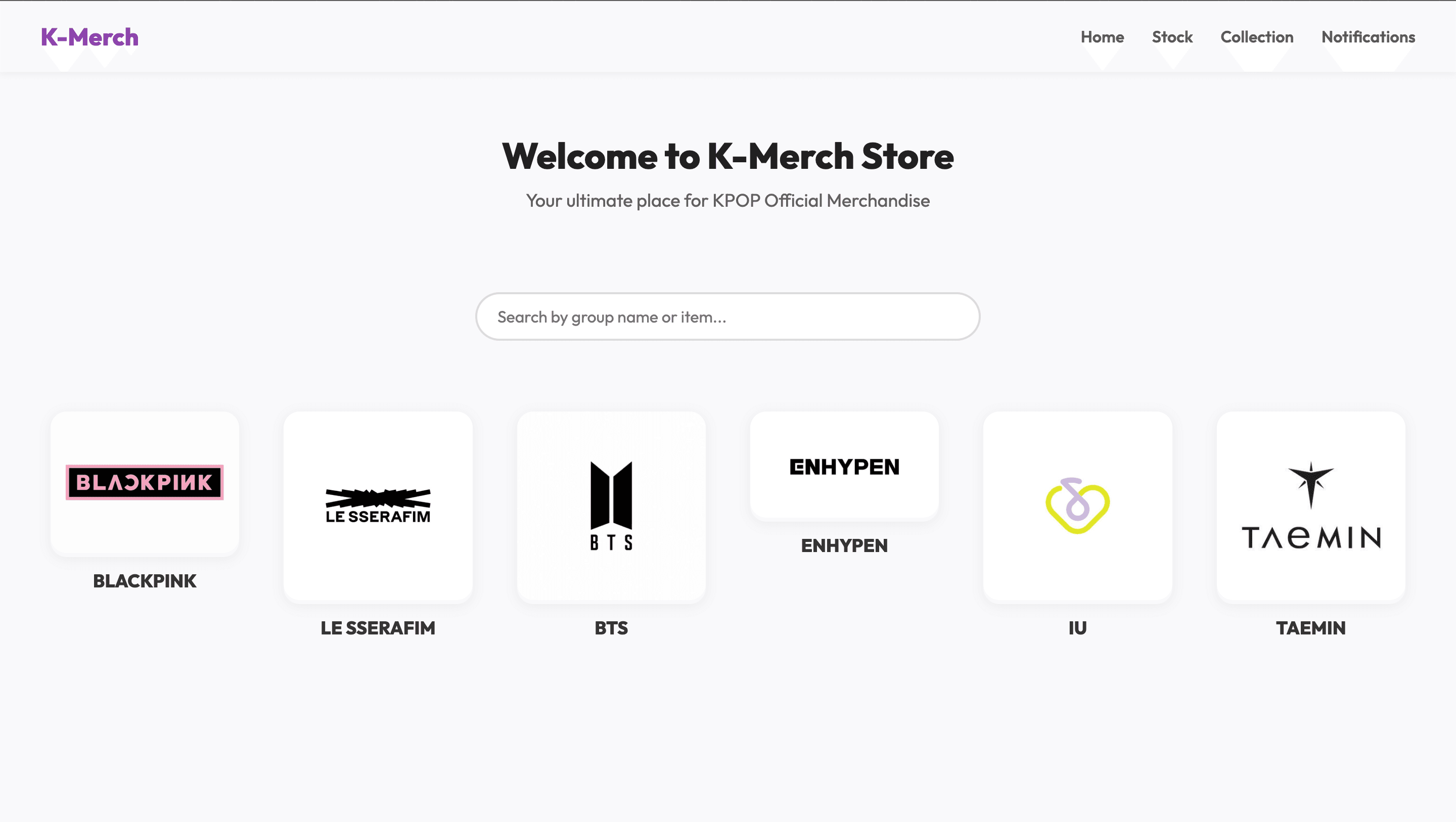
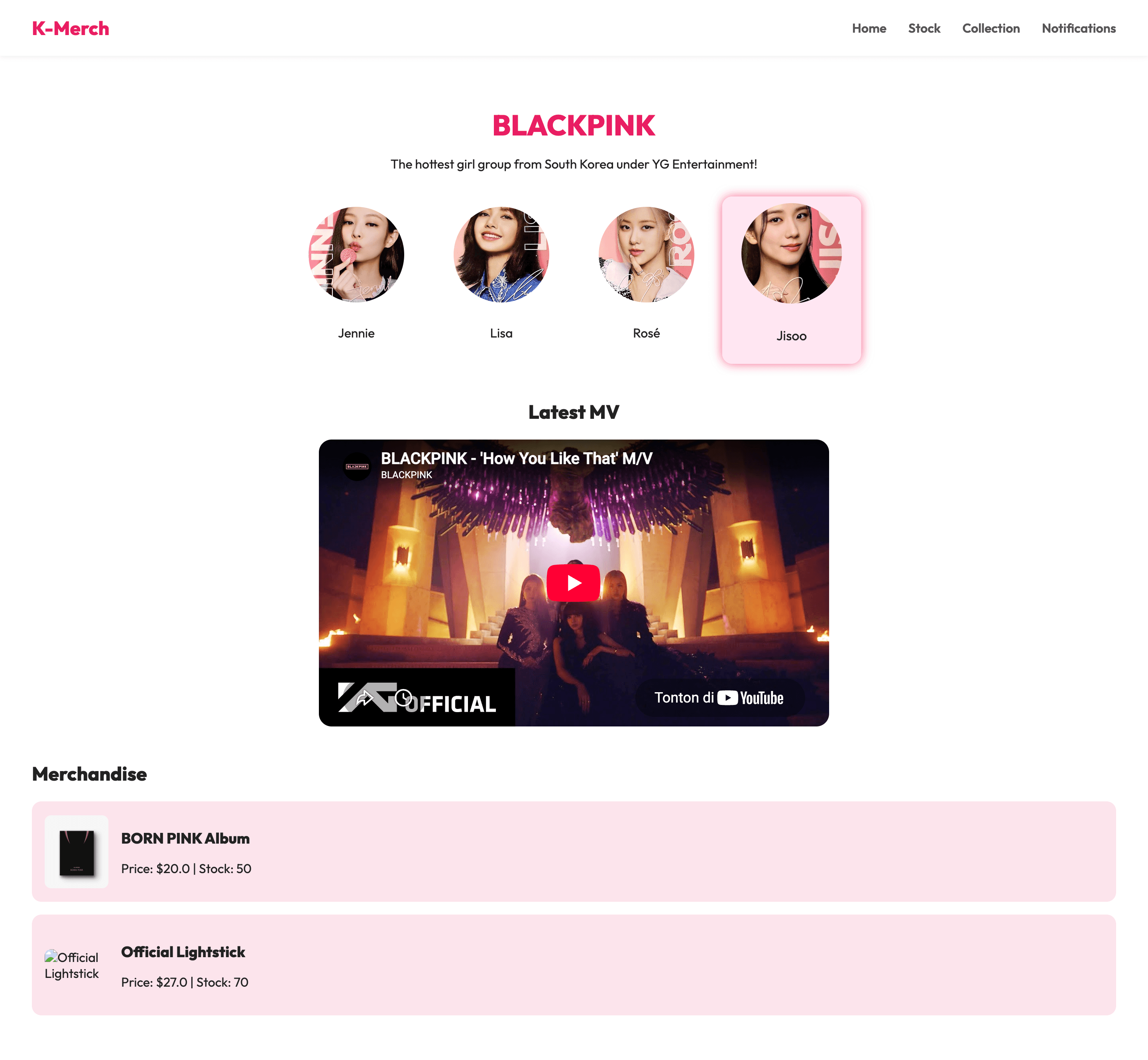
K-Merch Inventory is a web-based inventory management application designed for a K-Pop merchandise store. It allows administrators to organize merchandise, monitor stock quantities, update product information, and identify items with low stock.
Problem
Managing merchandise inventory manually can make it difficult to maintain accurate stock information and identify products that need to be restocked. Product data may also become inconsistent when it is stored across separate documents or records.
Solution
K-Merch Inventory provides a centralized web application for storing merchandise information and managing stock. It supports product management operations and automatically displays notifications when an item's stock falls below the defined threshold.
System Architecture
- JSP pages provide the user interface
- Jakarta Servlets process HTTP requests
- The Item model represents merchandise data
- The DAO layer handles database operations
- JDBC connects the application to MySQL
- MySQL stores merchandise and inventory data
- Maven manages dependencies and builds the WAR package
- Apache Tomcat deploys and runs the application
Screenshots
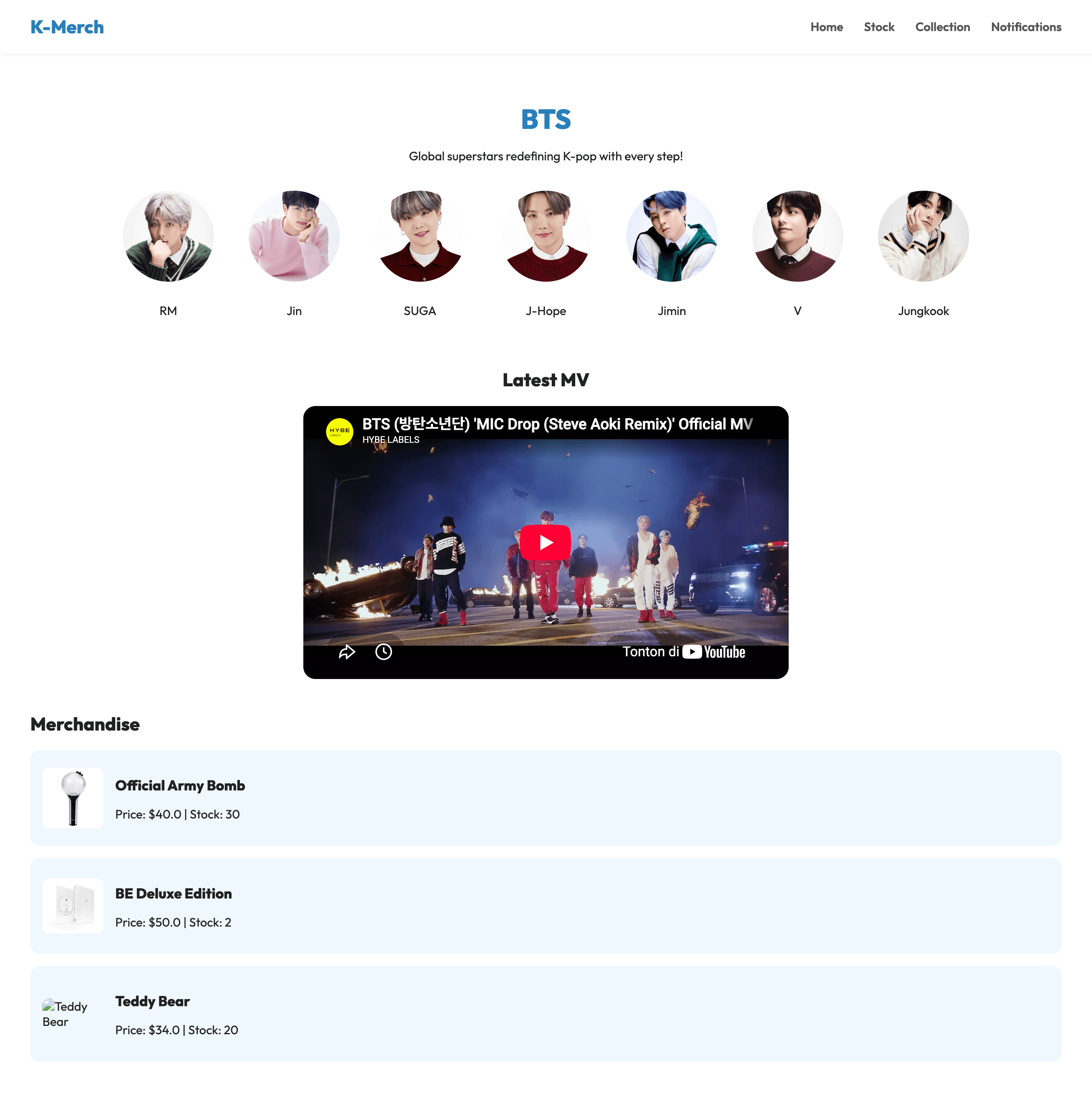
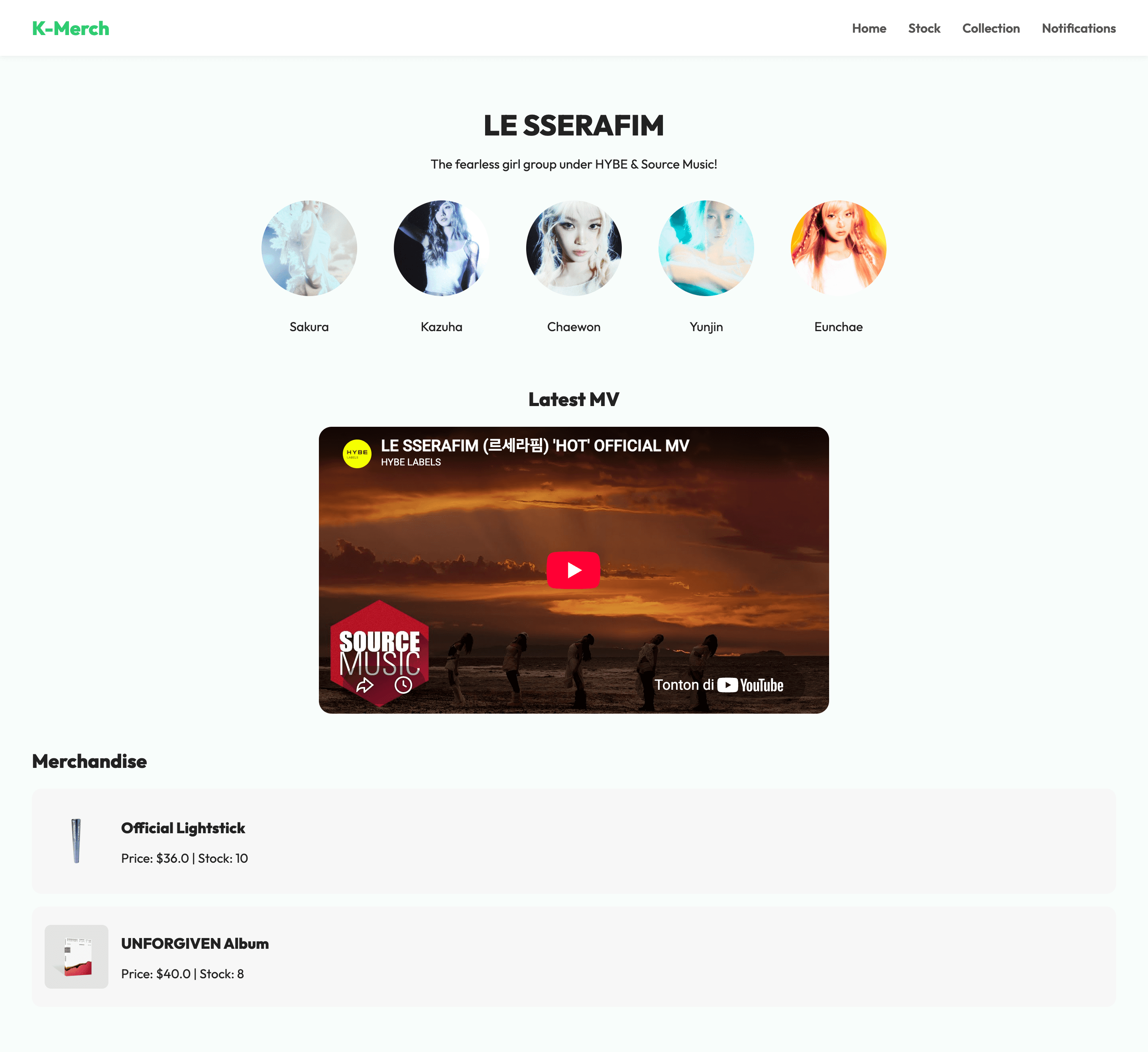
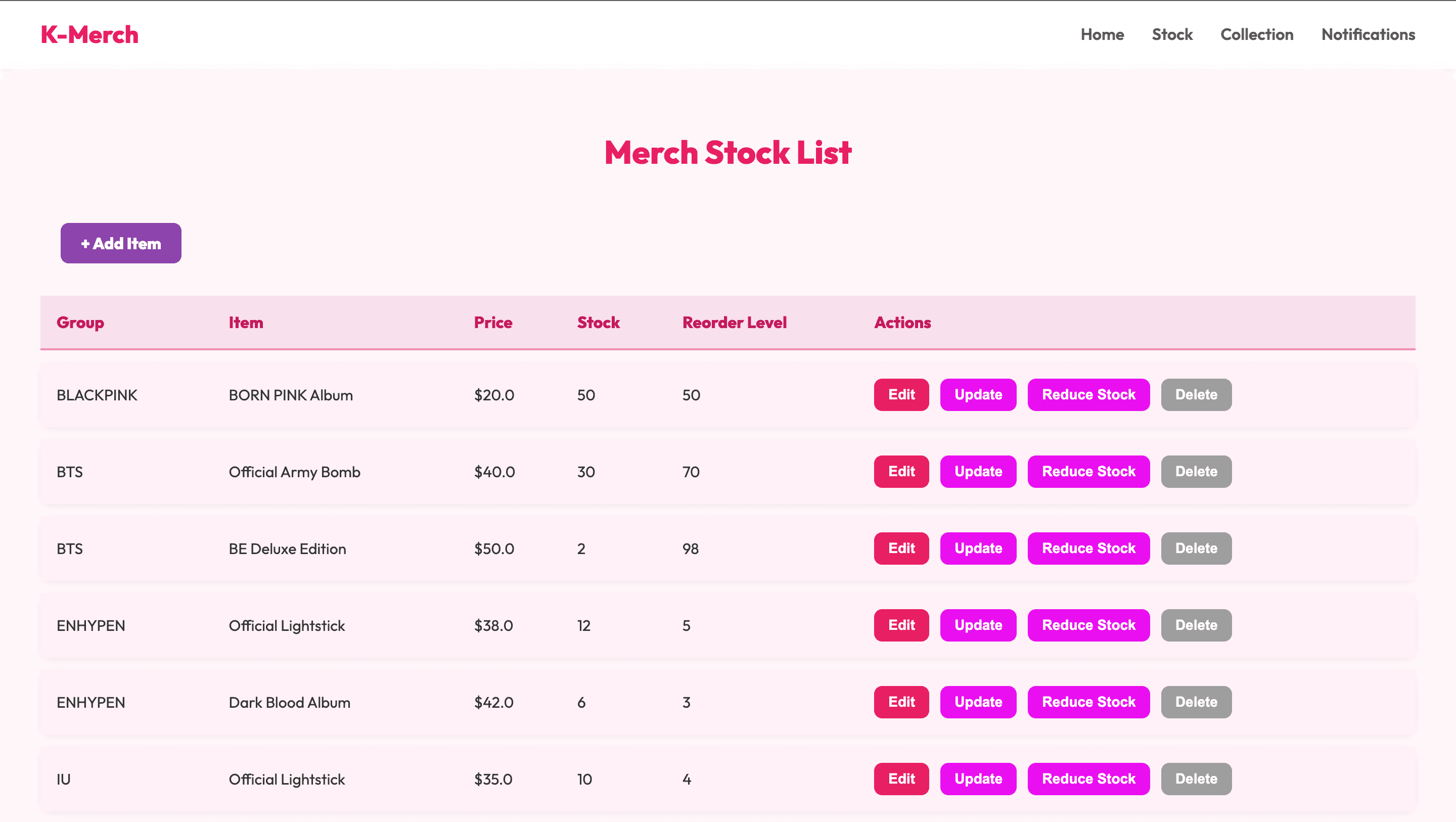
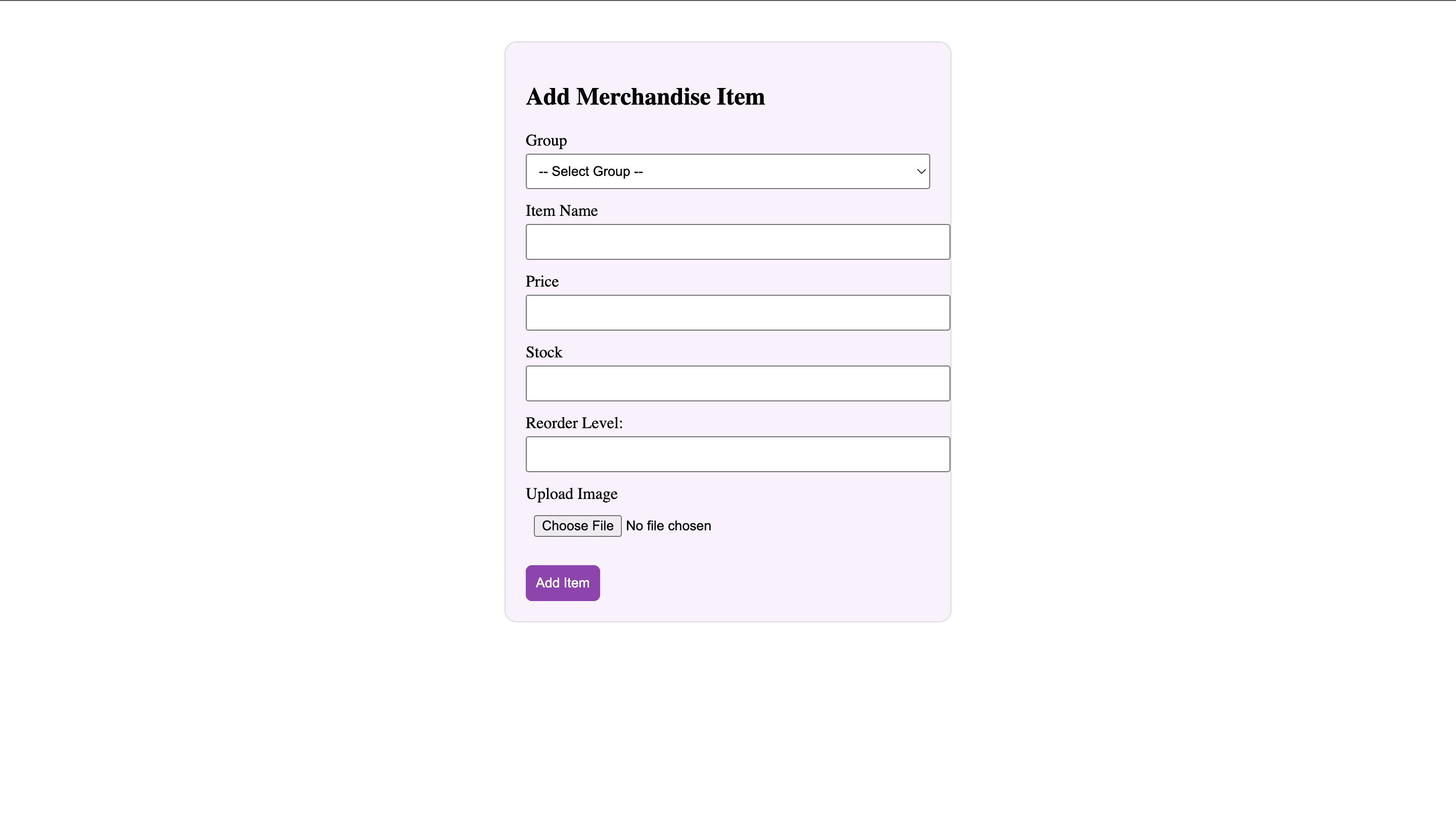
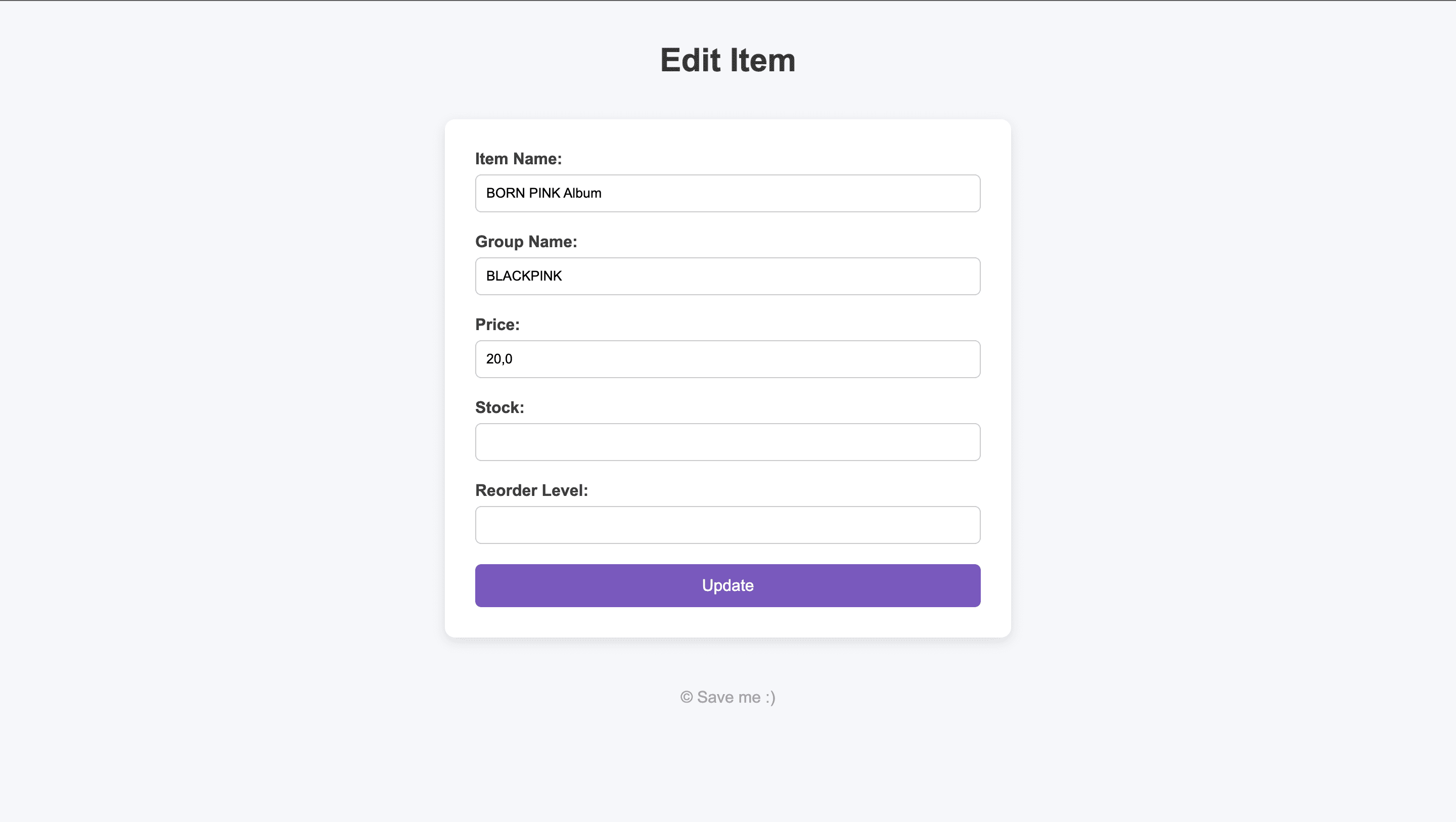
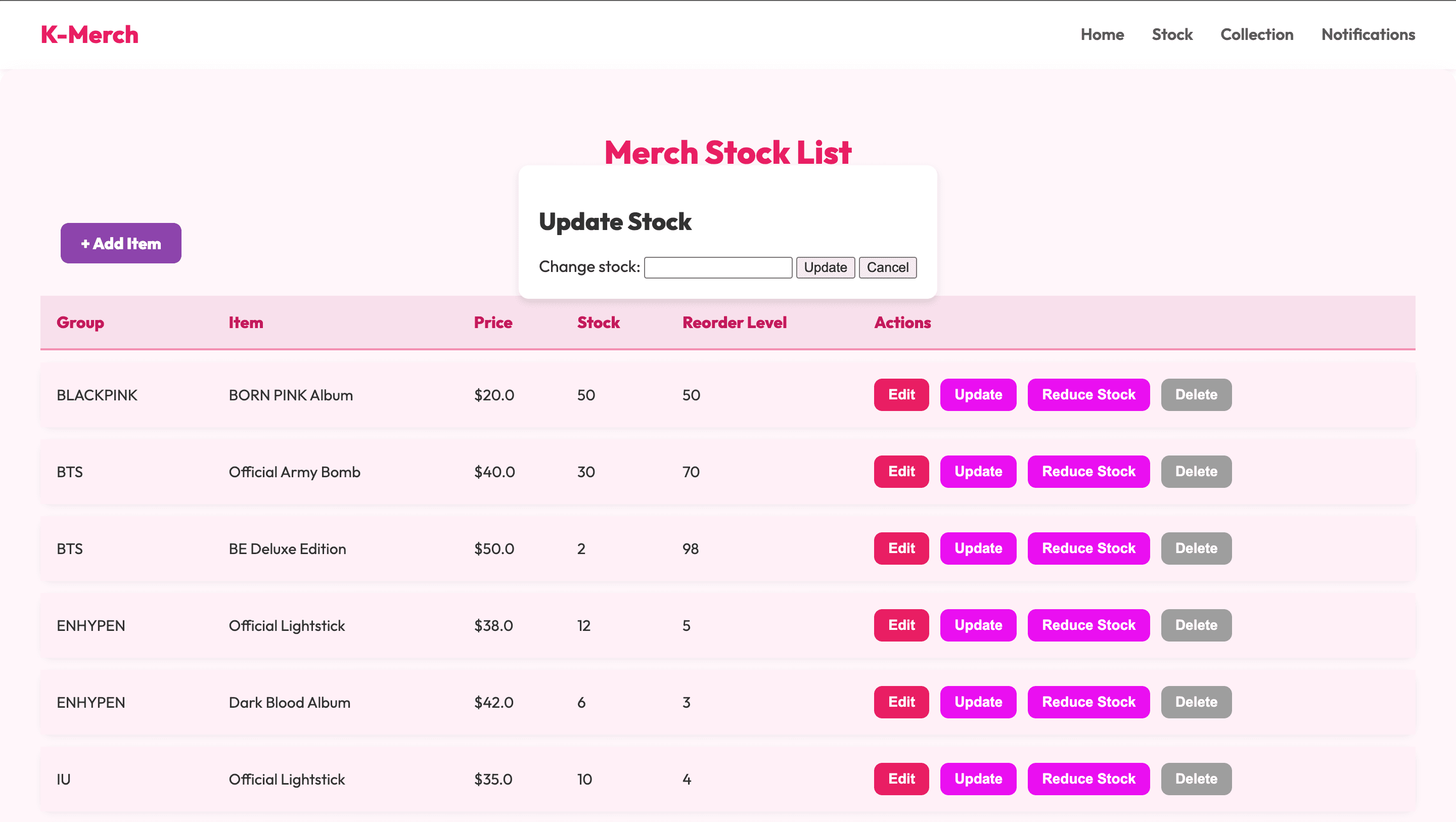
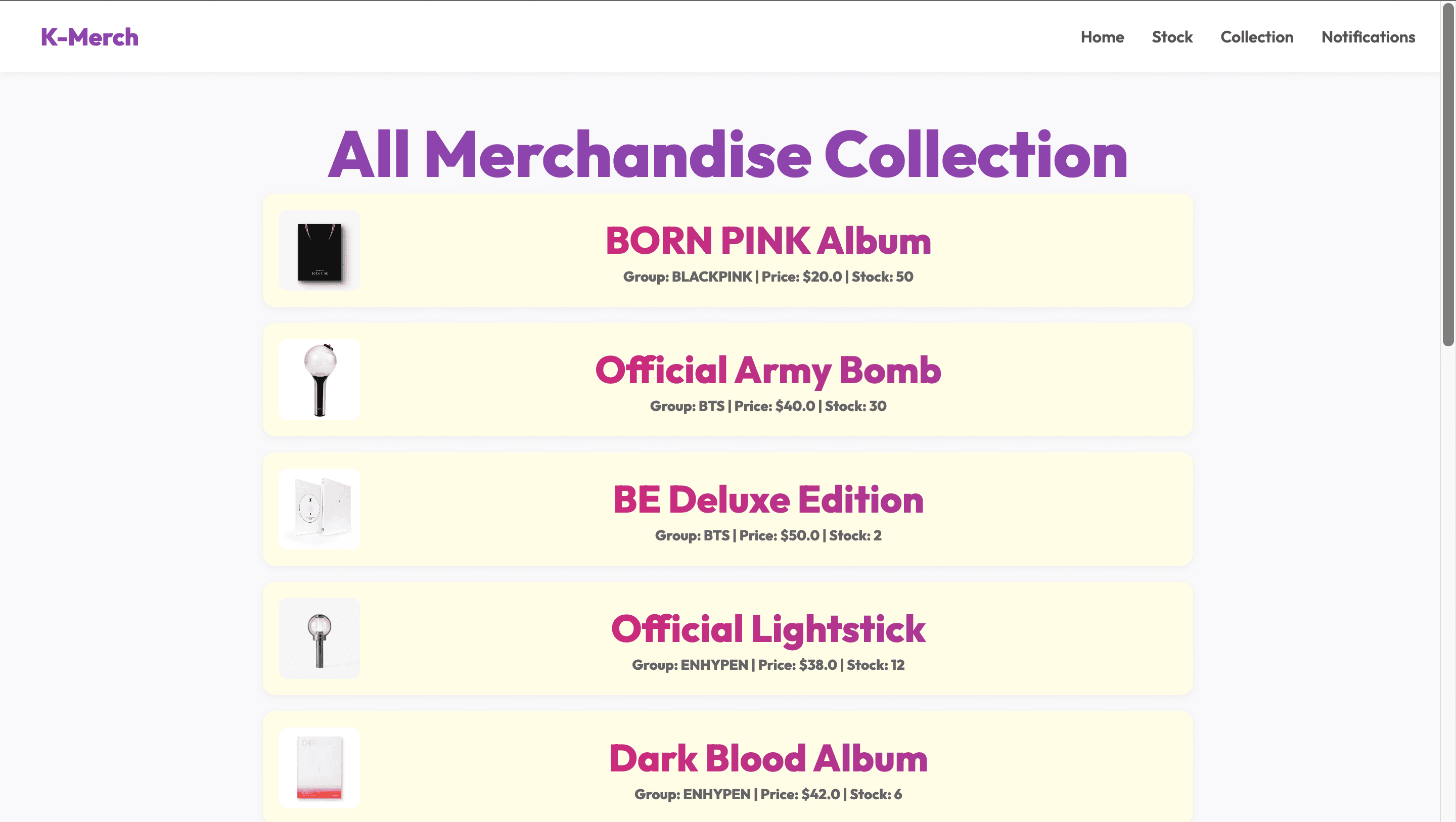
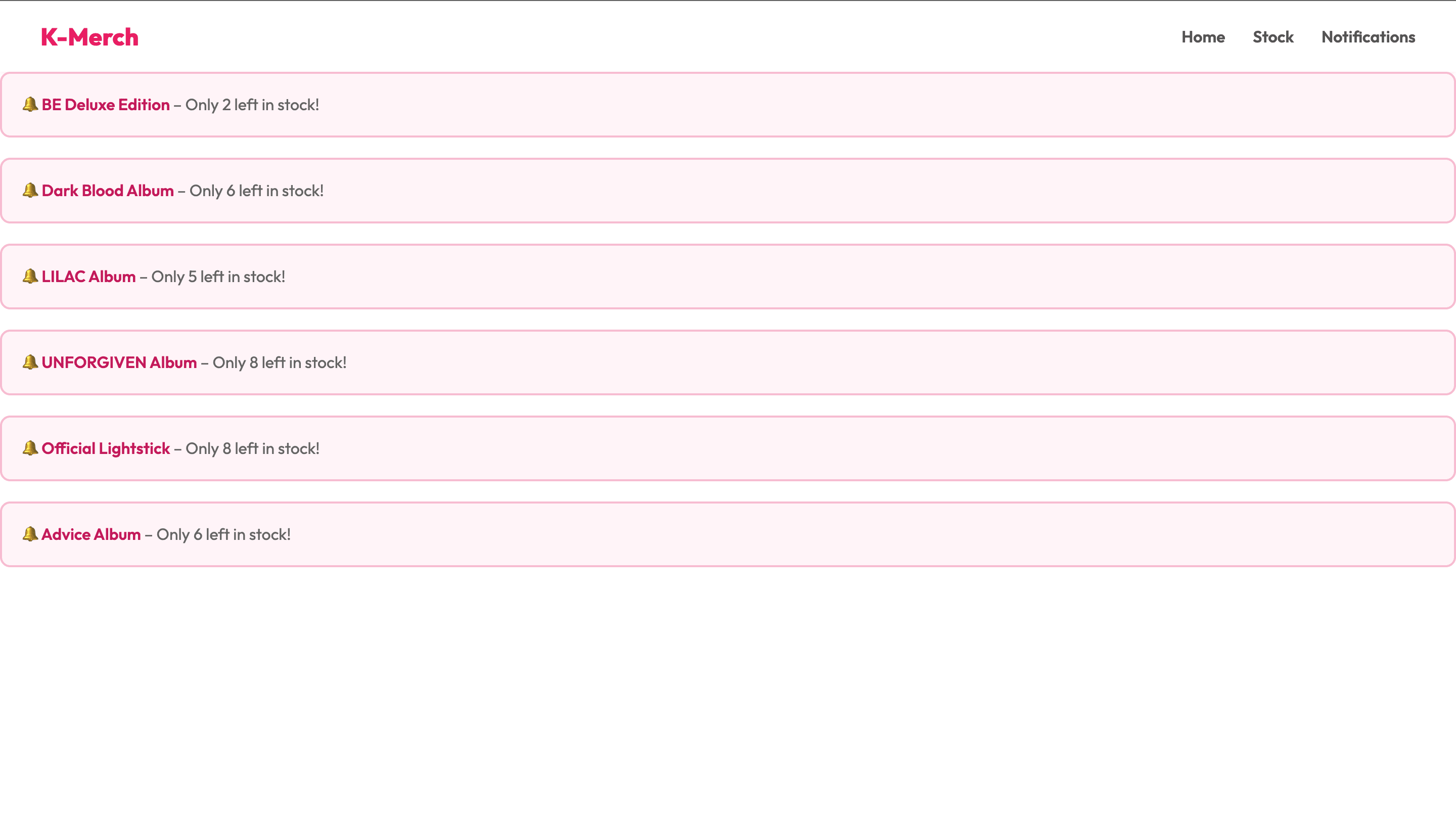
Demo Video
Challenges
- Integrating Java Servlets and JSP with a MySQL database
- Managing image uploads and product image paths
- Keeping inventory data synchronized after stock updates
- Implementing low-stock detection and notifications
- Deploying the application as a WAR package on Apache Tomcat
- Managing form data across multiple CRUD operations
Future Improvements
- Move database credentials to environment variables
- Add administrator authentication and authorization
- Improve server-side input validation
- Prevent stock quantities from becoming negative
- Add search
- filtering
- sorting
- and pagination
- Add product categories and transaction history
- Create a responsive mobile-friendly interface
- Store uploaded images in persistent cloud storage
- Add automated tests
- Deploy the application to a public hosting platform